A gentle guide to your first 40 days
As a Doula/Birthkeeper, I have been lucky enough to witness postpartum experienced with a myriad of different principles and practices applied… And as a woman who has now experienced the beautiful and raw season of being early postpartum twice, I felt it was time to share a gentle guide for those that seek it. Please note that this blog is non-prescriptive and is not intended to be medical advice; rather it is a soft outline of how one may wish to honour their First 40 Days after giving birth in a holistic way that prioritises rest - please use your discernment to utilise the information that serves you and leave what doesn’t.
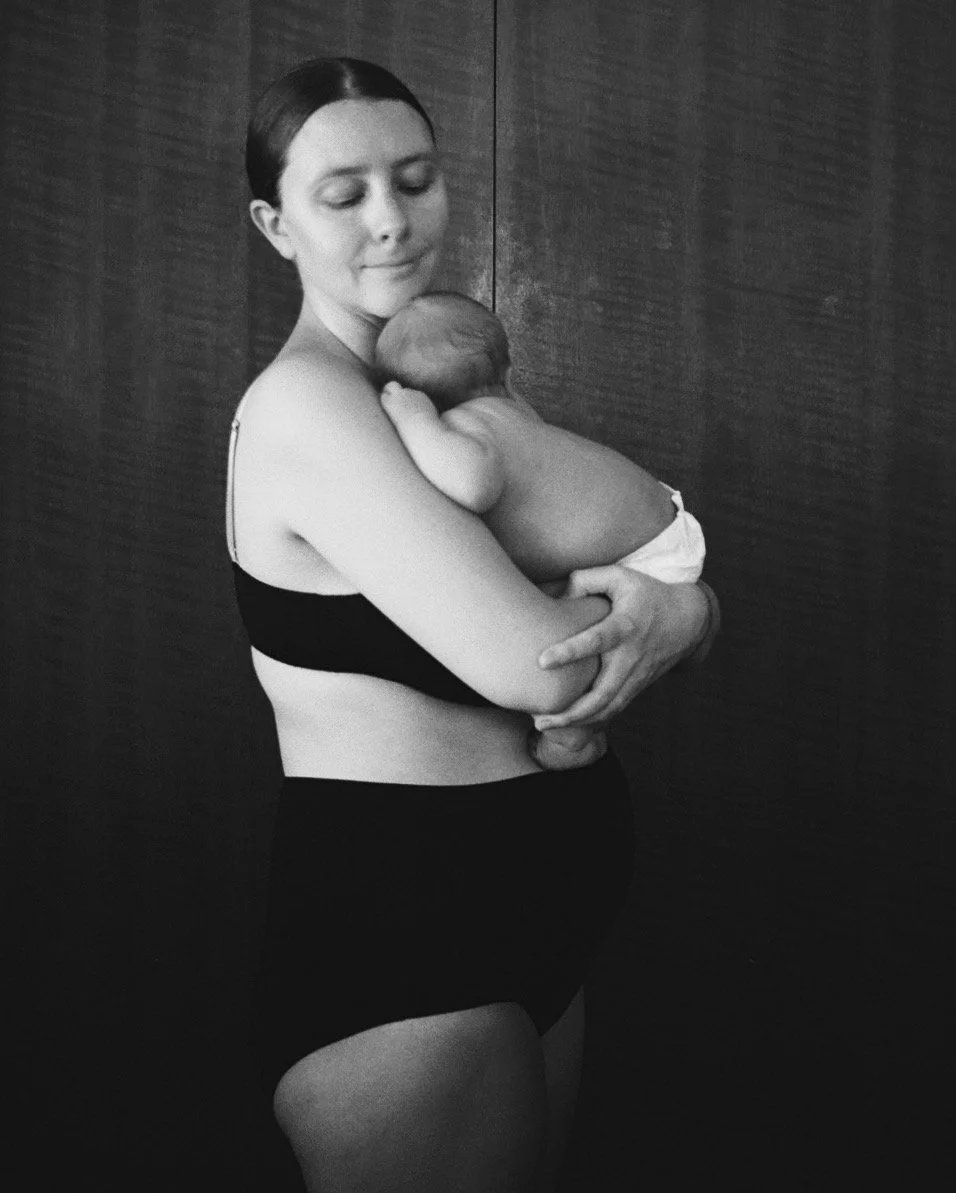
(Pictured is myself and my 2 week old daughter, Mellody Love.)
Today, in our Western culture, many mothers feel the harmful and often subtle pressure to “bounce back” after birth. To welcome visitors, manage the home and return to daily life as if the most profound experience of growing and birthing life didn’t just occur... Yet across centuries, traditional Eastern healing modalities like Traditional Chinese Medicine (TCM) and Ayurveda have preserved a very different understanding of what postpartum recovery can be.
It’s these cultures and traditions of honouring the first 40 days after birth as a sacred and irreplaceable healing window that recognises this time not only as a season for physical recovery, but as a deeply transformative rite of passage that requires supports for emotional integration, spiritual wellbeing, hormonal balance, and overall long-term maternal health. Believing that how we are tended to within these first 40 days, has the ability to impact our next 40 years of life as a woman.
And so, rather than asking how quickly a mother can return to the world, these traditions of honouring the First 40 days gently ask:
“How deeply can she be held while she heals?”
A simple summary behind the “why”
In both Traditional Chinese Medicine (TCM) and Ayurveda, birth is understood as a profound energetic opening. It is not viewed solely as a physical or medicial event, but rather as a moment in which a woman’s life force energy is expended in a powerful and necessary way to bring their baby Earthside.
In TCM, birth is seen to deplete Qi (vital energy), Blood (the substance that nourishes tissues and stabilises hormones), and Jing (deep constitutional essence stored in the Kidneys, associated with fertility, longevity, and vitality).
In Ayurveda, birth significantly aggravates/activates the Vata dosha (the energetic element composed of air and ether). Vata is known to govern movement, the nervous system, breath, elimination and hormonal communication. When aggravated, Vata is believed to manifest as imbalances within the body such as: anxiety, insomnia, dryness, digestive disturbance, feeling ungrounded or emotionally tender.
By honouring the First 40 Days in a holistic way that is designed to restore Qi, rebuild Blood, protect Jing, and pacify Vata… We begin to approach a woman’s wellbeing with a preventative model of care that not only supports the Mother-Baby dyad but the whole family itself and positively ripples into the wider community for decades ahead.
Week One (Days 1 - 7):
Theme: Closing the Portal & Protecting the Life Force that remains
The first week after birth is not simply about physical recovery (despite the common Western lens), rather it is a gentle containment so that the Mother may land from the ether, ground her nervous system, connect with her baby and establish milk supply; all while ever so slowly meeting the new version of her body.
After birth, Vata is heightened because something immense has moved through the body and excess space has been created in the womb that just held and nurtured a sweet baby for 10 moons. Throughout birth there typically has been downward pressure, intensity, opening, and release that came with it. This can leave a mother feeling spacious, raw, tender hearted and often dazed as she processes all that birth brought with it. In TCM, this is described as the body being “open.” The pores, the meridians (energy pathways), and the womb space are considered vulnerable to Wind and Cold - environmental factors that, if allowed to enter, are believed to lodge in the joints or uterus and contribute to future pain, fatigue, or menstrual imbalance.
For this reason, the first week is about closing the portal, protecting life force and prioritising warmth.
Ideally, the Mother’s world becomes small by design. Her primary responsibilities are to feed her baby, sleep, eat, and be tended to. Excess movement (both physically and within the mind) is avoided because movement further disperses Qi and unsettles Vata. Even well-intentioned visitors can be draining during this stage if not mindful or aware of the tenderness this time brings with it; as the nervous system is recalibrating from the intensity of labour, and stimulation of any kind can feel incredibly amplified. It is a time for the Mother to do less, to rest and receive (I know… This is often easier said than done).
Nourishment (Food) for Week One:
The primary intention for food in this first week is for it to be so gentle on the digestive system.
In TCM, the Spleen and Stomach system are responsible for transforming food into Qi and Blood. If digestion is weak (as it is in early postpartum) nourishment cannot be properly converted. In Ayurveda, this digestive capacity is called Agni, the inner fire. Excess energy used to digest takes away from the woman’s physical healing/recovery and is believed to diminish Agni; particularly if we overload it with heavy, raw, cold or processed foods.
This is why bone broths are foundational. Long-simmered broths from chicken, beef, lamb, or fish provide collagen for tissue repair, minerals for Blood rebuilding, and warmth to support circulation without burdening digestion. Rice congee that is slow-cooked until soft and almost creamy is also wonderful as it gently strengthens the Spleen and stabilises blood sugar. Infusing fresh ginger into each meal also warms the womb and supports the movement of Qi so stagnation (and constipation) does not occur.
Stewed apples or pears with cinnamon offer gentle sweetness while also supporting bowel regularity. This is so important after birth when dryness (a sign of Vata) may be present. Hydration is encouraged to always be warm… Think ginger or red date tea, or simply hot water. In TCM iced drinks and raw foods are avoided, not as restriction, but as protection. Simplicity is key.
Practical Tending for Week One:
When the body is comfortably warm, healing is strengthened and creates the foundation for replenishment to occur. We can offer warmth to the body by prioritising covering the focus areas of the vessel: the abdomen, lower back, neck, and feet. Warm showers replace long baths so not to risk getting cold quicker. Abdominal wrapping or gentle belly binding (even just with tube grip) can provide both physical support and a sense of containment, therefore helping the body feel held as it begins to close.
Emotionally, this week is the most sacred. The Shen (spirit, in TCM language) is tender. Vata is impressionable. And often, the antidote to this is found with simple practices such as: gentle birth storytelling, skin-to-skin contact with baby, quiet gratitude rituals or meditative practices - as these serve to anchor the birth experience and help re-establish the mind-body connection needed to integrate what has just unfolded. As magical as birth can be, it is one of the biggest rite of passage’s that one can journey through.
The first week after giving birth is not about productivity. It is about preservation. It is about peace.
The bedroom becomes the woman’s nest and sanctuary for this rest to actualise.
Spend the first week being horizontal and laying down in bed as much as possible.
When the slow closing of the birth portal is protected well, everything that follows within the First 40 Days has a stronger foundation to flourish.
Week TWO (Days 8 - 14):
Theme: Rebuilding Blood & Anchoring Vata
By the second week postpartum, the intensity of the woman’s physical openness has often begun to settle. Bleeding may likely be present but is usually slowing down. Typically, at this stage the body is no longer within its immediate protective mode and has therefore begun to transition into restoration. In Traditional Chinese Medicine (TCM), this stage centres on rebuilding Blood and strengthening Qi, while continuing to protect against depletion and stagnation. In Ayurveda, the priority remains as pacifying Vata, which is still easily aggravated and known to disrupt sleep, digestion, and emotional stability throughout this time. As someone who loves metaphors, I like to consider the second week of postpartum as a week of sowing seeds, after week one was a week of tending to the soil…
Blood in TCM is more than red blood cells… It is considered to be the nourishing substance that moistens tissues, supports hormone production, anchors the mind (Shen), and regulates menstruation/release within the womb. When Blood is insufficient, a mother may experience dizziness, palpitations, anxiety, hair shedding, dry skin, or emotional sensitivity. Birth naturally consumes and releases Blood; especially so if there was significant blood loss, a longer labour or complications.
Therefore, nourishment now becomes intentional and slightly more substantial to support “blood building” but the focus remains on bringing warmth and being easy to digest.
Nourishment (Food) for Week Two:
As the body strengthens, root vegetables such as pumpkin, sweet potato, carrot, and parsnip are really welcomed (and serve to be deeply grounding). From an energetic perspective, root vegetables grow downward into the earth, which symbolically anchors Vata and stabilises the body. They provide complex carbohydrates for sustained energy and gentle support for milk production. When slow-cooked in stews or soups, they are easier for the weakened digestive system to process.
Protein also becomes increasingly important during this phase for blood building. Soft-boiled eggs, slow-cooked chicken, and well-prepared (activated for over 24hrs) lentils or mung beans offer the building blocks for tissue repair. From a TCM understanding these foods contribute to both Qi and Blood formation because they provide concentrated nourishment. From an Ayurvedic understanding, they strengthen the early tissue layers; referred to as Rasa (plasma) and Rakta (blood tissue) which form the foundation for continued healing.
Blood-building foods take priority at this time... Black sesame seeds are especially valued in TCM for nourishing the Kidneys and replenishing essence. Red dates (jujube) are suggested to gently tonify Blood while supporting digestion. Beetroot soups add natural iron and sweetness without coldness. Dark leafy greens, thoroughly cooked with ginger and garlic, add minerals and support circulation.
Warming yet gentle spices also remain essential for the remainder of your First 40 days. Fennel, cumin, ginger, and cinnamon protect digestion from stagnation and prevent the accumulation of dampness (this is a TCM concept describing sluggish fluids and heaviness that can develop if the body is nourished but not metabolising properly). These spices also support Agni (your digestive fire) in an Ayurvedic lens, ensuring that the food consumed is converted into usable vitality rather than stored as congestion.
Practical Tending for Week Two:
Emotionally, week two can bring with it waves of feelings/energy that demand to be acknowledged. This is a time for grace and self-compassion. A time for being tended to by those who make you feel held and seen. As adrenaline fades and the body softens, any emotions asking to be felt during this time, really require a space that gifts unconditional love. In TCM, Blood is believed to nourish the mind, so rebuilding blood through food is said to stabilise one’s mood and offer reprieve (yet again, highlighting how nourishing postpartum focused meals are so important). It is also through continued rest that we can protect the nervous system while new rhythms begin to emerge around feeding and sleeping for the Mother-Baby dyad.
Stillness remains medicine. The body is rebuilding, one day at a time…
While spending more time sitting is recomended for week two, it is encouraged to remain within the nest/cocoon of the bedroom. Even sitting puts 60% more downward pressure and strain on the pelvic floor muscles than when laying; so go slowly, there’s no rush to move just yet. Protecting your pelvic floor muscles and your energy far outweighs the urge for a little walk that you might be aching for at this point.
Week two is also a really beautiful week for introducing herbal sitz bath’s or moxibustion into your day to day resting regime… I personally really welcomed foot, hand and head massages from any of my loved ones visiting to meet baby throughout this week; the perfect grounding touch and reminder that I was held (in every sense).
Week three (Days 15 - 21):
Theme: Strengthening Qi & Supporting Deep Tissue Repair
This is often a really transitional week, where women either feel energy return (if they have been resting and being nourished sufficiently) OR will start to feel the effects of depletion and exhaustion - I’ve always found that the body will always communicate clearly by this point as to whether it is a time to gently move from the comfort of the bedroom’s cocoon to other areas of the home OR whether more slowness and recluse is still needed.
By week three, the foundation of Blood rebuilding has been established. Attention now shifts toward strengthening Qi (aka the active force that powers immunity, stamina, digestion, and milk production). In TCM, Qi is often described as the “functional energy” of the body. Without sufficient Qi, even well-nourished Blood cannot circulate effectively.
It is important to remember that birth can significantly weaken Qi because it requires sustained muscular effort, hormonal shifts, and energy expenditure. Giving birth is one of the most energy expending experiences that one can endure. So if there is signs of Qi deficiency, I invite you to give yourself grace for the hard work your body continues to pursue as you sustain the wellbeing of your baby Earthside as well. In saying that, some signs of Qi deficiency to look out for may include fatigue that does not improve with rest, shallow breathing, low milk supply, or a sense of heaviness (either in the body or the mind).
Nourishment (Food) for Week Three:
Foods during this phase become more fortifying while remaining warm and well-cooked. Lamb and beef stews are traditionally recommended as week three arrives because they are considered to strongly restore Qi and to tonify Blood. The longer the cooking time, the better, as it continues to make them easier to digest while concentrating their nutrient density (a slow cooker is the best investment for this season of your life for this very reason - plus they are so easeful to use). In energetic terms, red meat is warming and supports Kidney energy - the deep constitutional reserve associated with vitality and reproduction.
While continuing to prioritise everything suggested from week’s one and two… The Mother may like to add barley and oats to the diet to strengthen the Spleen while providing sustained energy. Cooked grains act as stabilisers for digestion and blood sugar, preventing the fluctuations that can further exhaust Qi. It is encouraged to add more ghee or sesame oil into meals as it increases lubrication, counteracting the dryness associated with aggravated Vata.
Healthy fats play an important role now. In Ayurveda, oiliness directly pacifies Vata. Ghee nourishes tissues and supports hormonal synthesis. Sesame oil strengthens joints and nourishes the deeper layers of the body. Additionally, from a TCM perspective, fats contribute to building Blood and moistening dryness; which is particularly important after the fluid loss that comes with birth.
Herbal tonics may be introduced more intentionally as week three arises (if you haven’t already implemented). In TCM, herbs like Dang Gui (Angelica sinensis) are used to tonify and move Blood simultaneously. While in Ayurveda, Ashwagandha is encouraged at this point as it supports nervous system resilience and adrenal recovery. Please remember, that these are not casual supplements but traditional medicinal plants designed to restore deep reserves, so it is always recommended to refer to your holistic health practitioners as needed to adapt to your unique needs.
Practical Tending for Week Three:
The body only gave birth, three short weeks ago, so continue to keep movement minimal. Even if strength feels slightly improved, overexertion can easily scatter newly forming Qi/energy. The intention of week three is consolidation; to allow tissues, hormones, and energy to stabilise before gradual expansion and re-emergence. Any practices that invite you to rest and soften your thoughts within the mind are the ultimate gift to yourself at this stage of postpartum.
I have a free guided meditation called “Honouring Of Self” that you are welcome to use as a tool to soften. You can find the track here.
Week Four (Days 22 - 28):
Theme: Restoring Structure & Rebuilding Essence
By week four, the body has progressed from acute repair to structural integration. Connective tissues, ligaments, pelvic muscles, and fascia are still reorganising. In TCM, the Kidneys govern bones and reproductive function. Supporting Kidney Qi and Jing (the deep essence that influences longevity and fertility) becomes central at this stage. Jing is considered the most precious and finite reserve of vitality. It is also a quality that is depleted through pregnancy and childbirth, and it cannot be restored quickly, but it CAN be protected and gradually supported through lifestyle and nourishment. I share this because it is important to remember, while the body is innately intelligent and knows how to heal, we must continue to create the gentlest conditions and provide the right nourishment for optimal healing to occur in this sacred window of time...
Nourishment (Food) for Week Four:
Mineral-rich foods are especially important now as week four arrives. A perfect addition to the diet is seaweed broths, as they provide trace minerals that strengthen bones and endocrine function. Another is bone marrow based soups as they deeply nourish the Kidney system. Fish can also contribute to intaking high-quality protein and omega fatty acids that support hormonal balance and reduce inflammation.
Practical Tending for Week Four:
In Ayurvedic terms, this season gently nourishes the deeper dhatus (the sacred layers of tissue that form a woman’s strength and vitality. These include muscle (Mamsa), the soft protective layers of fat (Meda), and the reproductive essence (Shukra/Artava). After birth, these tissues are naturally tender and rebuilding. They ask not for restriction, but for steady, loving nourishment. This is not a time for doing or striving. It is a time for reflection and replenishment… A time for tending to the body in a way that allows it to restore its depth and resilience from within.
Abhyanga (the ritual of warm oil massage) is one of the most beautiful ways to support this restoration. Rooted in Ayurvedic wisdom, it is the practice of slowly anointing the body with warm oil, often black sesame oil or castor oil, through gentle, attentive touch. After birth, when a mother may feel open, porous, or energetically scattered, the simple act of smoothing warm oil over the skin creates a sense of containment. It brings warmth to dryness, softness to tension and grounding to a nervous system that has journeyed through the intense rite of passage that birth initiates.
The warmth of the oil is intended to soothe heightened Vata and as the excess Vata settles, it is believed that the mind softens, sleep deepens, digestion strengthens, and tissues receive the lubrication they need to repair. Abhyanga becomes a quiet reminder that the mother’s body not only serves as a functional gift for her baby but it is sacred vessel that is worthy of touch and care.
Even as energy continues to gently return and confidence grows, the protective container of the First 40 Days still remains. The body has not yet fully sealed or healed. Cold exposure, raw or chilled foods, and strenuous movement are still best avoided and contraindicative. Though the outside world may beckon, internally the systems are continuing to recalibrate. Warmth, softness, and steadiness remain the guiding principles.
Week Five (Days 29 - 35):
Theme: Consolidating Vitality & Nervous System Stability
By the fifth week, many mothers notice a gentle return of clarity (especially if rest has been honoured and prioritised). Energy may feel steadier and the fog/birth daze may dissipate in small waves. Overall week five often brings with it, moments of feeling more capable and more present in the body. It is important to continue to anchor to your intentions for the First 40 Days and remember that this renewed vitality does not necessarily mean the work of healing is complete, rather it simply tells us that the rebuilding is unfolding as it should. Although, above all, I invite you to let your body be your guide; these Eastern teachings offer a framework, but your own lived experience, energy levels, and intuition will always speak most clearly to what you uniquely need.
Nourishment (Food) for Week Five:
Foods that are dark, mineral-rich, and deeply cooked are often chosen during this time to gently fortify that root. Black beans and adzuki beans, simmered slowly with warming spices like ginger or cinnamon, offer plant-based nourishment that builds both Blood and essence. When prepared with care (by being soaked, well-cooked and served warm) they become grounding and strengthening rather than heavy. These foods are not about restriction or cleansing; they are about offering depth and steadiness to the body.
In the evenings, a warm cup of almond, sesame OR cows milk gently simmered with dates and a touch of cinnamon can feel like a simple yet soothing tonic for the nervous system. These ingredients are traditionally understood to nourish Blood, soothe the mind, and support ongoing lactation. Iron-rich broths and slow-cooked meats remain to be deeply beneficial, especially as the body quietly prepares for the eventual return of your bleed (menstruation) and cyclical rhythm.
Practical Tending for Week Five:
From an Ayurvedic perspective, this is the week where rhythm becomes medicine. Predictability softens the nervous system (for the Mother, the baby and her immediate family unit). Eating at regular times, sleeping early, dimming lights in the evening and limiting overstimulation help keep Vata enery calm and contained. Even the slighted disregulation or overcommitment can ripple through the system/subtle body during this sensitive stage.
As the body continues to heal and bleeding has significantly lessened (or stopped completely), some women may feel called to incorporate gentle yoni steaming into their postpartum care. Rooted in many traditional cultures, yoni steaming involves sitting over warm herbal steam to allow moist heat and plant medicine to softly bathe the pelvic tissues. In both Traditional Chinese Medicine and herbal folk traditions, warmth is understood to encourage circulation and help dispel lingering cold from the womb space after birth. The gentle heat may support tissue repair, promote healthy blood flow, and offer a sense of energetic cleansing and closure. This practice should only be considered once bleeding has slowed and with appropriate guidance, as the womb remains tender in the early weeks. When approached with patience and care, yoni steaming can become a quiet ritual of reconnection, an opportunity to sit in stillness, to breathe warmth into the pelvis and to honour the profound opening that birth required.
If Yoni Steaming is a new practice to you, you may like to refer to this blog I shared a few year back: https://www.micaelajane.com/blog/yoni-steaming
Week SIX (Days 36 - 40+):
Theme: Sealing the Body & Honouring the Transition
The final days of the First 40 mark a sacred threshold. By this stage, the body has moved through deep layers of repair as tissues are knitting, Blood and Qi have been replenished to a greater degree, digestion is stronger and the nervous system has begun to stabilise in its new rhythm of life. There may be a gentle return of strength and clarity. Movement might feel more natural. Energy may feel wider. And still, the body is continuing to consolidate internally.
Week Six is also about integration.
Instead of treating these days as the end of care, they become a gentle bridge into ongoing nourishment. The habits cultivated over the First 40 Days, such as; warm meals, mineral support, intentional rest, hydration, and tending to the needs of the heart are not meant to disappear... Rather they become part of daily life moving forward. A new foundation.
Nourishment (Food) for Week Six:
Postpartum is not a phase that closes after six weeks. The body continues rebuilding long after visible recovery has occurred. Mineral replenishment, especially iron and trace minerals, remains important as menstruation eventually returns and hormonal cycles resume. Continuing to prioritise nourishing foods, quality proteins, healthy fats, and deeply cooked meals protects vitality for months and even years beyond birth. However, it is also a week to celebrate, so I invite you to nourish your body with a meal or baked treat that feels exciting, to honour the First 40 Days of becoming the woman you are today.
Stuck for ideas? Here is a yummy cacao based bliss ball recipe: https://www.micaelajane.com/blog/cacaoloversblissballrecipe
Practical Tending for Week Six:
This phase may also feel appropriate for a closing ritual of sorts… A blessing, a ceremonial acknowledgement, or a quiet moment of gratitude for the journey of birth and recovery. Ritual helps the psyche register completion and honours the transformation that has taken place. Feel into how YOU my like to celebrate this time with the reverence you deserve.
As energy begins to expand outward, expansion should feel gradual and supported. Movement, social engagement, and responsibilities will naturally return slowly but I invite this returning to be guided by internal cues rather than external expectations.
Week Six is not about returning to who you were before. It is about stepping forward as someone who has been restored, strengthened, and forever changed… While carrying forward the nourishment of the First 40 Days into the rhythm of everyday life.
Final Notes:
Receivership:
The First 40 Days invite something radically different to what our Western culture promotes… And that is receivership.
Receiving nourishment.
Receiving emotional support.
Receiving help with cleaning, cooking, and logistics.
Receiving rest without guilt.
Traditional postpartum care was never designed to be done alone. In many cultures, community gathered around the mother so she could focus entirely on recovery and bonding with her baby. The collective understood that protecting the mother protected the family.
Privilege, Preparation & Protection:
Today, honouring this time also often requires a level of privilege… With access to time off, financial stability, supportive partners, extended family, doulas, or hired help. Not every mother has equal access to these layers of support. That reality deserves acknowledgment without shame or judgment.
However, even within limitation, care is still possible. Creativity allows tradition to adapt:
Preparing meals in advance or organising meal trains
Asking loved ones to take on cleaning, shopping, or administrative tasks
Setting boundaries around visitors and overstimulation
Prioritising warm cooked foods over convenience
Choosing rest over external expectations whenever possible
Honouring the First 40 Days does not demand perfection. It simply demands intention. And if full confinement is unattainable for your First 40 Days, integrating even small elements of it meaningfully reduces strain on a recovering body. Warmth, nourishment, and protected rest (even in partial form) make a difference.
When a mother allows herself to receive support instead of performing strength, her nervous system shifts from survival into restoration. When she accepts care without apology, her body can redirect energy toward rebuilding vitality.
Comfort with receivership is not passivity. It is a conscious choice to align with biological truth rather than cultural pressure.
Ultimately, the power of this time lies in protection.
When a mother is supported to rest deeply, nourished with warming and mineral-rich foods, shielded from overstimulation, and held by community, she rebuilds from within. Her energy stabilises. Her hormones recalibrate. Her emotional landscape settles. Her long-term health is strengthened. The First 40 Days are an investment, not only in recovery, but in decades of vitality. When honoured, this time becomes a quiet but powerful act of resistance against depletion and urgency.